Plan a home EV charging install before you request quotes
Electric Charge Guide helps homeowners understand charging needs, likely project scope, electrical-capacity questions, permits and installer quotes. The calculator shows what moved the estimate instead of hiding the assumptions behind one number.
Updated . Current product and federal-credit facts are linked to the organizations that control them.
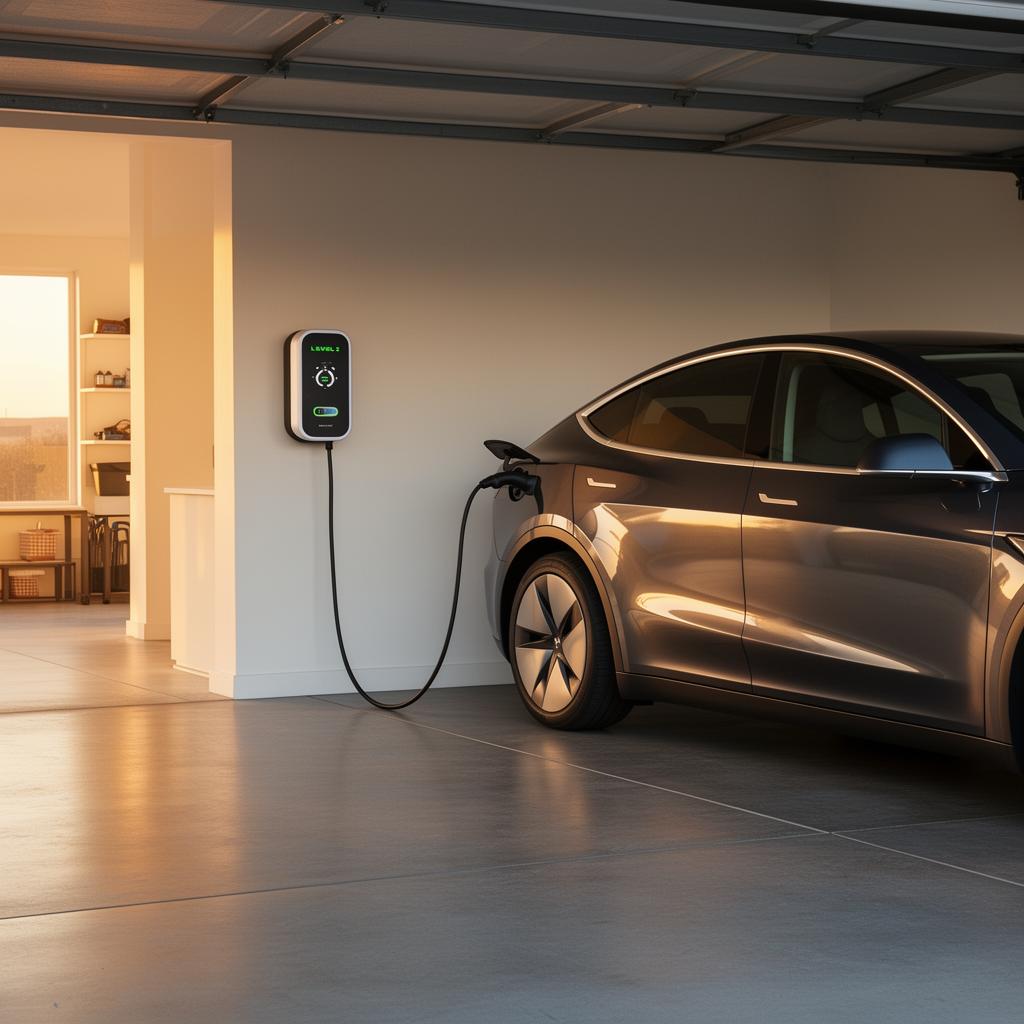
Home EV charging planning calculator
A transparent national planning model. It does not pretend to know your local labor rate, permit fee or electrical capacity.
Why the range moved
Editorial national planning allowance for a straightforward professional installation; not a published government price.
Longer routing generally adds conductor, raceway and labor. Finished surfaces and routing constraints can matter as much as measured distance.
This is a risk buffer, not a prediction of a panel upgrade. Spare breaker spaces alone do not establish electrical capacity.
Editorial national allowance only. AFDC states permits may be required by local building and permitting authorities; actual fees vary by jurisdiction.
Editorial planning allowance; verify the current price of the exact charger you intend to buy.
Electrical capacity has not been confirmed in this scenario. A qualified electrician should perform the applicable load/capacity assessment before you treat the range as actionable.
Bring to a quote
- A clear photo of the electrical panel and service rating
- The exact charger model and maximum input/output information
- A measured route from panel to parking location
- Photos of finished walls, exterior routing or trenching obstacles
- Who will obtain the permit and schedule inspection
What this tool cannot know
It does not inspect your service, perform a load calculation, read local amendments, quote labor, determine trenching, or know your permit fee. Those are deliberately left to the authority having jurisdiction and the professional evaluating the home.
Read the model methodology →Transparent assumptions
The Methodology page labels manufacturer/government facts separately from editorial planning ranges.
No remote capacity verdict
An empty breaker slot does not prove service capacity. The tool treats unassessed capacity as uncertainty rather than declaring that you need—or do not need—a panel upgrade.
Built for quote comparison
The goal is to help you ask better questions about route, charging power, permits, exclusions, inspection and warranty before you hire.
How Electric Charge Guide researches its guidance
Electric Charge Guide is an independent consumer information resource focused on U.S. home EV-charging installation decisions. Our goal is to make the scope and uncertainty easier to understand before a homeowner requests professional quotes.
Primary sources first
For current product, federal and provider facts, we prefer the manufacturer, government agency or service provider that controls the information.
Facts and estimates stay separate
Sourced specifications and rules are distinguished from our editorial planning allowances. Those allowances are not government price data or contractor quotes.
Clear limits on our role
We are an independent consumer publication, not a licensed electrical contractor, engineering service or local code authority.
Corrections are open
Readers can report an outdated price, specification, program, source link or calculator assumption and point us to the controlling source.
Read our Methodology, About page, Editorial Policy, or report a correction.
The decision sequence
A home-charging project gets easier when you make decisions in the right order: charging need first, then equipment and connection, then electrical scope, then quote.
- 1
How much charging do you need overnight?
Use daily driving and parking time to decide whether Level 1 is already enough or Level 2 is worth installing.
- 2
Which charger and connection fit that need?
Check the vehicle's onboard charging capability and the manufacturer's installation instructions before sizing the project around a charger's maximum rating.
- 3
What does the home actually require?
Have a qualified professional assess capacity, circuit route, outdoor/detached conditions and the local permit process.
- 4
Are the quotes really comparable?
Put route, permit responsibility, exclusions, commissioning and warranty in writing so the lowest number is not hiding a smaller scope.
Focused decision resources
We intentionally consolidated overlapping cost and retailer pages. Each resource below now has a distinct job.
Installation cost
Understand the physical scope that widens or narrows a quote.
Panel & service capacity
Know why spare breaker spaces do not answer the capacity question.
Permits & inspections
Find the authority having jurisdiction and verify the real local process.
Installer hiring worksheet
Compare licensing, load assessment, routing, exclusions, change orders and warranty.
Plug-in vs hardwired
Choose a connection style based on equipment instructions and use case.
Level 1 vs Level 2
Decide whether you actually need a new 240V charging setup.
What the calculator does not know
- Your actual service/load calculation
- Your local contractor's labor price
- Your city's exact permit fee
- Utility-side service work
- Hidden routing obstacles
- Your exact tax or incentive eligibility
That limitation is deliberate. A credible national planning tool should expose uncertainty rather than simulate local precision it cannot support.
Electrical work and local code compliance should be evaluated by qualified professionals and the authority having jurisdiction. Electric Charge Guide does not provide step-by-step instructions for energized or high-voltage DIY work.